Sex workers and workers in sex-related fields are serving one of our most basic human needs. But our government doesn’t seem to value them much.
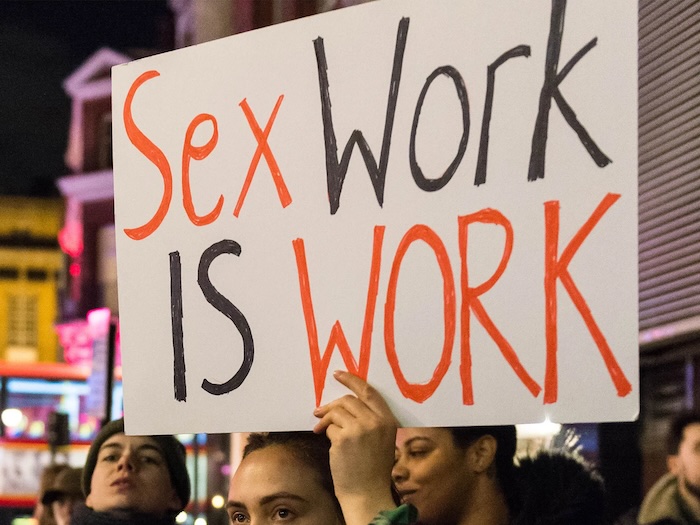
Sex work is everywhere. It’s time we started recognizing & protecting it.
For several reasons, it’s hard to know exactly how many sex workers there are in the US.
The International Union of Sex Workers estimates that somewhere between 1 and 2 million adults in the US receive money or goods in exchange for consensual sexual services, erotic performances, or sexually oriented content. An unknown number of those people (and their customers) are LGBTQ+… but it’s hard to know the exact number.
That’s because sex work is illegal in 49 states (excluding Nevada), and because the term “sex work” can refer to many professions, including many that don’t involve any sexual contact whatsoever.
As a result of its widespread illegality, most sex work happens in semi-secret online forums for “escorts and massage” and discreetly in local communities, where police can’t easily see it.
No federal laws criminalize sex work, but the federal government uses anti-human trafficking laws like SESTA/FOSTA to shut down forums where sex workers trade business and safety advice. The government can use these laws to potentially target and censor any content that could possibly be seen as facilitating sex work, including sex education websites, personal dating profiles, as well as erotic art galleries and fiction libraries.
That is, our government sees sex workers, people working in the sex industry, and people working in sex-related fields somewhat similarly, even if their jobs don’t include any sexual contact with others. Religious conservatives have a similarly broad conception of these groups, vilifying them all as “immoral,” “pornographic,” or “unhealthy” threats to traditional families, social decency, and childhood innocence.
I don’t mention this to accept right-wing framing or condemnation of these groups, but rather to draw our attention to the fact that we are surrounded by professionals whose livelihoods interact with human sexuality.
In a way, we’re surrounded by these professionals and interact with their work every day, often without realizing it. Just consider: Have you ever…
- … hired a sexual escort or erotic massage?
- … seen a stripper, go-go dancer, or burlesque performer?
- … looked at porn, adult art, or sexy softcore images?
- … seen a movie or TV show with scenes of physical intimacy?
- … listened to a song with sexually explicit lyrics?
- … read torrid romance novels, adult comics, or erotica?
- … read a study about human or animal sexuality?
- … used a personal site for dating or hookups?
- … talked to a medical or mental health professional about sex or reproduction?
- … purchased PrEP, contraceptives, or abortion medication?
- … bought a sex toy, fetish gear, or lube?
If so, then, to some degree, you have had a brush with sex workers, people working in the sex industry, or people working in sex-related fields.
Most workers in the fields listed above would never call themselves “sex workers” because the term usually refers to people who face way more social stigma and legal persecution for selling their bodies for other people’s pleasure. But people working in sex-related fields are still widely misunderstood, looked down upon, and seen as expendable for their labor, leaving them subject to mockery, political harassment, or even violence.
It makes sense. America is a sex-phobic country that largely shies away from educating people about sex, making sexual healthcare widely accessible, acknowledging non-hetero and cisgender sex lives on camera, or even allowing people enough bodily autonomy to handle their own reproductive healthcare.
Conservative religion sees sex as a sinful, corrupting act that should almost never be discussed in public and should only occur with a different-sex spouse behind closed bedroom doors. Some media outlets won’t run stories about sex and sex-related professions for fear of being labeled NSFW (not safe for work) or losing sales from prudish would-be advertisers.
So we’ve ended up in a nation where we hardly have honest public discussions about sex or people working in sex-related fields, even though almost every human is a sexual being.
If we were really honest, we wouldn’t consider sex and sex-related workers as so different from other kinds of laborers. Almost all workers use their bodies to bring others satisfaction in exchange for money: Customer service workers anticipate clients’ bodily and emotional needs to deliver pleasure; many employers pay laborers to use their physical skills in private settings for pre-negotiated time spans; workers of all kinds offer intimate restorative touch or help us seem more sexually attractive to others; actors, models, and athletes all display themselves and touch one another for our entertainment.
In a perfect world, free from sexual trauma, abuse, and trafficking, sex and sex-related work would be just another career option for those seeking to satisfy one of humanity’s most basic bodily drives.
LGBTQ Nation’s November 2026 Monthly Issue, entitled “Sex workers: An invisible labor force,” seeks to expand readers’ understanding of what sex and sex-related work, the many fields and people involved, and the complex socio-political and cultural factors that keep sex and sex-related workers in their respective fields despite conservative disapproval and the threat of socio-political persecution.
Our cover story will talk with real-life LGBTQ+ sex workers and union organizers about their fight for legal rights and protections that would help make their jobs (and lives) freer from government interference or interpersonal violence.
In one of our features, Andrew Gurza, a disabled nonbinary sex and disability podcaster, explained the complicated emotional and financial realities of hiring sex workers to treat their social isolation and touch starvation. Two other writers interviewed adult content creators on OnlyFans to understand the challenges and support networks in their work.
We talked with two queer surrogate partner therapists about the unique sexual services they sometimes offer to people who feel unable to explore intimacy with others. We also spoke with organizers of queer sex spaces about the communities of care they’ve cultivated, and with LGBTQ+ creators behind explicitly sexual video games and comic books, to understand what drives their work and how they handle potential censorship or public disapproval.
We also have numerous articles showing how different types of sex-related work brush up against social mores or political policies.
There are many passionate arguments for and against sex work; this edition is not here to debate those. Rather, it’s here to widen your conception of what sex work can be, its profound contributions to queer life and community health, and the ways these workers help explore a completely natural side of human experience while bravely facing up to social forces that would prefer we keep our sexual selves hidden behind bedroom doors.
Complete Article HERE!